
What Makes a Good Small Business Website? A Practical UK Guide
Website planning, customer experience, design, authenticity, trust, content and conversion.

The best small-business websites make a complicated job feel simple.
They help the right people find the business, understand what it offers, trust what they see and take the next step without confusion. To the visitor, that journey should feel natural. Behind it are careful decisions about page structure, design, written content, original images, mobile usability, internal links and technical SEO.
When those elements are planned together, the website can represent the business accurately, answer the questions that matter and provide a strong foundation for search visibility and enquiries.
This guide explains what goes into that work and why each part matters.
Quick answer
A good small business website quickly tells potential customers who you are, what you provide, where you work and why they should trust you. It should be attractive, straightforward to use on a mobile phone and built so search engines can properly access and understand it.
Good design matters, but it is only one part of the job. The pages, content, calls to action and technical SEO need to work together. When the planning has been done properly, the website feels straightforward to use.
Article index
- A good website is a connected system
- A busy high-street shop or a showroom hidden in the woods?
- Any page can become the front door
- What should customers understand immediately?
- Start with the customer, not the template
- Professional design without unnecessary effects
- Present the real business and demonstrate trust
- Written content and images
- Mobile usability, speed and accessibility
- Give every important page a sensible next step
- SEO should be built into the website
- Privacy and data collection
- What happens after launch?
- A practical test for your website
- Building a website and building a good website are different jobs
A good website is a connected system
Search engines need to understand what the business does, the subjects it has genuine expertise in and the areas it serves. The website must serve people first while providing search engines with clear, consistent information.
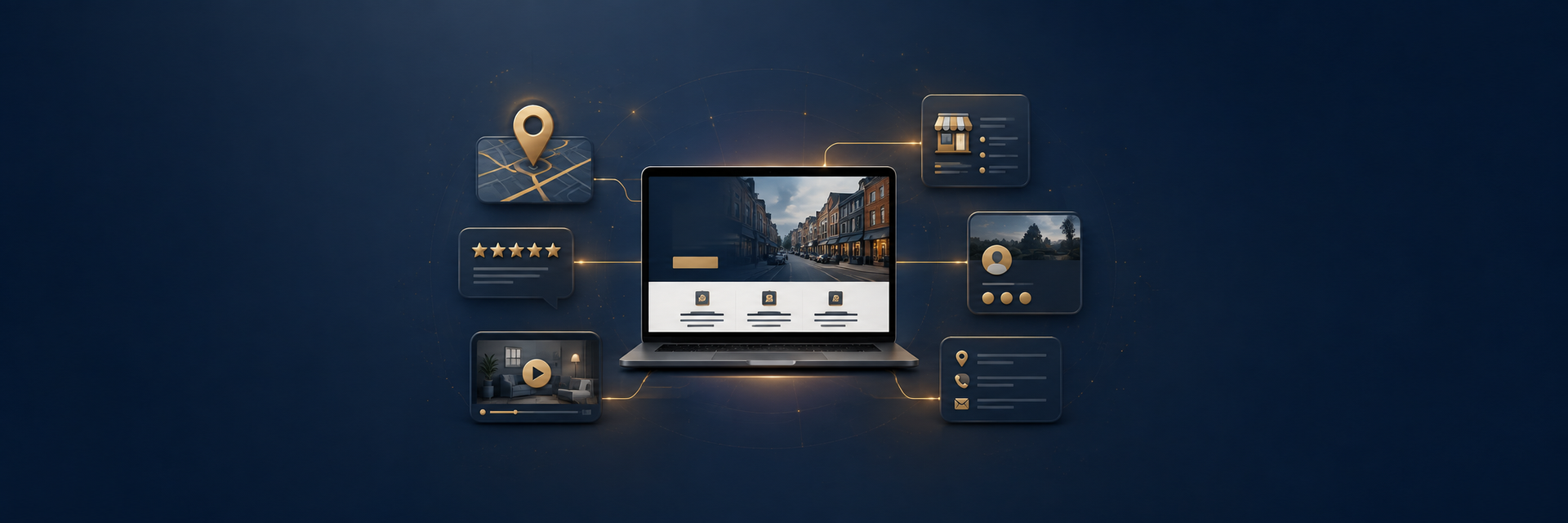
A good website is a connected system. Its structure, design, words, photographs, links and technical setup each have a job. Page structure affects navigation and SEO; image choices affect appearance, trust and speed. The site must serve people first while giving search engines clear information about the business, its expertise and the areas it serves.
A busy high-street shop or a showroom hidden in the woods?
Imagine an impressive showroom deep inside a forest. It has beautiful displays and dramatic lighting, but no proper roads, signs or directions leading to it, it has no visibility.
The people who are sent to it may be impressed, but it is still failing at one of its main jobs: attracting potential customers and helping generate enquiries and sales.
Now compare it with a smart, modern useful and popular shop on a busy high street. Its signage makes clear what it sells, its window displays gives people a reason to look inside and its layout helps customers find what they need, quickly. It may be less theatrical, but it is visible, accessible and commercially succesful.
The same principle applies online. Some attractive websites have excellent graphic design, animation and unusual effects, yet provide weak service information, little useful content and no clear route from a search to an enquiry. They may look impressive without doing what the business needs.
Graphic design, website design, copywriting and modern SEO are different skills. If a website is treated mainly as a visual project, it may overlook how Google accesses its pages, what potential customers search for and what will persuade them to make contact.
The answer is not to choose SEO instead of good design. It is to combine them. Focused service pages and helpful articles create roads into the website. Clear page titles, headings and search results act as signposts. Logical navigation and internal links direct visitors once they arrive, while sound technical foundations help search engines discover and understand the pages.
Following Google’s guidance cannot guarantee rankings, but building around real users, helpful content and sound technical foundations gives search engines a much clearer website to understand. A business website should showcase the business, not simply act as a display of visual creativity.
The strongest small-business website combines the presentation of a showroom with the visibility and usefulness of a successful high-street shop. It looks professional, is easy to find and gives potential customers a clear route through the door.
For a closer look at the technical, content and indexing problems that can prevent that visibility, read Why Is My Business Not Showing on Google?
Any page can become the front door
Search results do not always send people to the home page. A search may lead directly to a service, product or article because that page contains the most relevant answer.
What matters is that they have arrived at the website. If the page answers their question and convinces them that the business can deliver, they may enquire immediately. They do not have to read six pages first.
Others will look around. Clear navigation and relevant internal links can take them from an article to a service, reviews, completed work or information about the business, showing them more of what it offers and why it can be trusted.
The purpose is not to keep everybody clicking around the website. It is to give suitable customers the information and confidence they need to get in touch. Once a conversation begins, the business can understand their requirements, answer further questions and explain other relevant services or advantages.
Wherever somebody enters, they should understand where they are, what the business offers and what they can do next. Every important page is a potential front door to the business. This is also why the website should act as the centre of a connected online presence, as explained in Your Website as the Hub of Your Online Presence.
What should customers understand immediately?
The first visible part of a page should answer the visitor's main questions. On a home page, that normally includes:
- the main service or type of business;
- the geographical area covered, where location matters;
- the type of customer the business helps;
- a clear reason to continue reading; and
- an obvious route to make contact or view the relevant service.
“Welcome to our website” tells the visitor almost nothing. “Secure Caravan and Motorhome Storage near Ipswich” immediately identifies the service and location. A tradesperson may lead with the work and area covered; a specialist manufacturer may need to identify the product and its application.
Trying to say everything at once makes the page so crowded that nothing stands out. Establish relevance first, then guide the visitor towards the detail.
Start with the customer, not the template
Businesses may organise work by departments or internal product names. Customers usually look for a service, a solution or an answer.
One of the easiest mistakes is starting with the design before deciding what each page needs to achieve. A page's purpose should be settled before its layout is approved.
There is no ideal structure for every small business. A tradesperson and a specialist manufacturer may need very different websites. The structure should reflect what customers need before making contact, not copy a competitor's layout.
Navigation should use familiar choices. “Caravan Storage” is more useful than “Solutions”. Distinct services will normally need their own pages, not two sentences on a general services page.
A focused service page can explain what is provided, who it is for, important limitations, useful examples and what to do next.
Internal links connect services with articles, project examples and contact routes. Google's SEO Starter Guide recommends logical organisation and links that help people and search engines discover related pages. This should be planned before writing begins, not dictated by empty boxes in a template.
Professional design without unnecessary effects
A professional website should look consistent and appropriate for the business. Colour, typography, spacing and photography should make important information easy to recognise.
This does not mean the website should look plain. Visual creativity can strengthen a brand, but every choice needs a purpose. Animation, sliders and background video can distract, slow the page or make controls harder to use.
Strong design combines readable text, consistent styling, well-prepared photographs and layouts that work on smaller screens. It should feel like the business, not an anonymous template with a different logo. The best websites often become simpler as the thinking behind them improves.
The World Wide Web Consortium's accessibility guidance also recommends sufficient contrast, clear navigation, identifiable controls and adaptable layouts, considerations that generally make a website easier for everyone to use.
Present the real business and demonstrate trust
Small businesses have advantages large competitors find difficult to reproduce: real people, direct knowledge and genuine customer relationships.
A website can look professional without making the business credible. Polished design creates a good first impression, but vague claims, stock photography and little evidence of real work can leave visitors with more questions than answers.
Credibility needs evidence: real photographs, named people, detailed reviews, relevant projects and current accreditations. Explaining the work, the results and who customers deal with is more persuasive than “quality service at competitive prices”.
Broken links, an unreliable form, old opening hours or inaccurate information can quietly undermine an otherwise professional presentation. Each detail adds to the visitor's confidence or takes something away.
Google advises businesses to respond to reviews in its guidance on gaining reviews. For a local business in Suffolk or elsewhere in the UK, consistent information across its website, Google Business Profile and other profiles also reassures customers.
The owner does not have to write the website. Conversations, rough notes and genuine photographs contain the knowledge needed to create accurate content that still sounds like the real business.
Written content and images do the real explanatory work
Design shapes the experience, but words and images explain what the business actually provides.
Website copy should use language customers understand while retaining useful detail. “We provide bespoke solutions” says little; explaining the service, who it suits and what happens next is useful.
There is no ideal length for every page. A contact page needs little text; a specialist guide may need considerably more. Google states that there is no magical word count. Use enough to cover the subject properly without padding.
Original photographs can show scale, finish, facilities and real people in a way stock images cannot. Each should have a purpose, suitable dimensions and appropriate alternative text where it conveys information. Google's image guidance explains how descriptive alt text supports accessibility and understanding.
Helpful articles answer questions that do not belong on a service page, demonstrate expertise and lead readers towards relevant services. Google's guidance favours helpful, reliable, people-first content, not material created mainly to attract traffic. How Helpful Blog Articles Build Trust, Authority and Search Visibility explains how this content supports the website rather than operating as a collection of isolated posts.
This is harder than it looks because the words, images, design and page purpose must support the same message.
Mobile usability, speed and accessibility
A site that looks excellent on a monitor can fail on a telephone. Visitors should be able to read, use the menu, tap buttons and complete forms without fighting the layout.
Oversized images, unnecessary scripts, multiple fonts and elaborate effects can slow a page. The answer is not to remove useful visuals, but to optimise what remains.
Google's Core Web Vitals consider loading performance, responsiveness and visual stability. The measurements are useful, but real testing on different devices remains essential.
Readable text, adequate contrast, logical headings, meaningful labels and accessible controls help people with different needs and make the website clearer for everyone.
Speed and accessibility can seem invisible when they work properly. When they go wrong, they may become the only thing the visitor notices.
Give every important page a sensible next step
A call to action identifies the next step: telephone, request a quotation, arrange a visit, check availability or send measurements.
The action should match the page and the amount of commitment the visitor is ready to make. “Buy now” is unsuitable for a complex service that requires a survey. “Contact us” may be too vague when the real next step is to arrange a visit or check availability.
Calls to action belong at natural decision points, not after every paragraph. Forms should request only essential information and confirm successful submission. Hiding the next step loses enquiries; repeatedly demanding it feels pressured.
SEO should be built into the website
SEO is sometimes treated as something applied after the design is finished. By then, many important decisions have already been made.
Page choices, URLs, headings, content and internal links affect how clearly the site is understood. SEO starts with planning, not keywords added at the end.
Sound foundations normally include:
- pages that search engines can crawl and index;
- one clear preferred address for each page;
- descriptive titles, headings and readable URLs;
- logical navigation and internal links;
- an XML sitemap and accurate redirects;
- page-specific structured data where appropriate; and
- setup and checking through Google Search Console.
Structured data, often called schema markup, gives search engines explicit information about certain page content. It must match what is genuinely visible. It is not a ranking shortcut, and more markup is not automatically better.
Location pages require similar judgement. They need genuine information about the service and area; near-identical pages with only the town name changed provide little value.
Poor technical planning can leave pages difficult to discover, duplicated or disconnected. Technical SEO cannot compensate for weak content, but it helps search engines access and understand it.
The structure, content and SEO should therefore be planned together. Leaving those decisions until after the design is finished usually creates more work.
My modern SEO service explains how I apply this approach to core webpages and supporting blog articles.
Privacy and data collection
Even a simple business website may collect personal information through enquiry forms, analytics, booking systems or mailing lists.
The Information Commissioner's Office guidance explains that businesses holding personal data will generally need a privacy notice. Visitors also need information about cookies, and non-essential cookies require consent before they are used.
The wording must reflect the business and the tools actually used. Copying another company's privacy or cookie text may leave important gaps or make statements that are simply untrue.
What happens after launch?
A good website needs to be launched carefully, checked properly and given time to establish itself.
Once it is live, important pages, forms, contact links, analytics and enquiry tracking should all be tested. The XML sitemap should be submitted through Google Search Console, key page addresses inspected and indexing requested where appropriate. Any structured data should also be validated, including with Google's Rich Results Test where relevant.
Search engines then need time to discover, process and reassess the pages. Some changes may appear quickly, while others can take weeks or months. Indexing and rankings cannot be guaranteed, and a new website should not be repeatedly altered because of a few days of search data.
Small changes requested by the business owner after launch are normal. Seeing the complete site live may prompt adjustments to wording, images, layout or emphasis, even when analytics have not revealed a problem.
Ongoing improvements may include:
- monitoring search queries, impressions and clicks;
- measuring enquiries rather than traffic alone;
- checking that important pages have been indexed;
- correcting technical problems;
- adding new work, photographs and reviews;
- improving pages when customer questions reveal missing information; and
- publishing helpful supporting content.
A website must remain accurate as services, teams, opening hours and examples change. Its key details should also remain consistent with the company's Google Business Profile and other established online profiles. Considered updates protect trust and improve the website's usefulness.
A practical test for your website
Can you answer “yes” to the following?
- Is it immediately clear what the business does and where it works?
- Can visitors quickly identify the right service?
- Does each important page answer the questions a potential customer is likely to have before making contact?
- Does the website make it clear why someone should choose this business rather than another?
- Could an inner page make sense as somebody's first page?
- Is the navigation clear and consistent?
- Does the website reflect the real business?
- Are photographs, reviews and accreditations genuine and relevant?
- Does the site work properly on a mobile phone?
- Are buttons, links and forms easy to use?
- Does every important page offer an appropriate next step?
- Can search engines access and understand the important pages?
- Are related services and articles connected logically?
- Are indexing, search performance and enquiries being measured?
The aim is not to pursue perfect technical scores for their own sake. It is to identify anything that may prevent a suitable customer from finding, understanding, trusting or contacting the business.
The wider relationship between the website, business profiles, directories, reviews and social content is covered in Your Website as the Hub of Your Online Presence.
Building a website and building a good website are different jobs
A good small business website should be clear, authentic and useful. Its design, words, photographs, structure and technical setup should tell the same story. Visitors need to recognise that they are in the right place and feel confident taking the next step. Search engines need to understand the same information.
Knowing the ingredients is not the same as knowing how to put the whole thing together. The skill lies in making them work as one website.
That work should begin with understanding the business. An early conversation and, where practical, a visit can reveal how it operates, what makes it different and which details could persuade a potential customer to make contact. Those findings should shape the structure, written content, images and design before important decisions are fixed.
Professional guidance should explain how a choice may affect usability, search visibility or enquiries. Once the likely consequences are clear, the final decision belongs to the business owner. A good process combines informed recommendations with an accurate presentation of the business.
My Complete Website Creation service brings business research, planning, structure, professional content writing, original imagery, design and technical SEO together in one project. I begin by understanding the business, often through an early visit, so the finished site presents it in its best and most accurate light without overlooking details that could help win an enquiry. The client benefits from a joined-up process, sound search foundations and sensible refinements after launch.
If you are unsure whether your website needs improving or replacing,
contact me for an initial, no-pressure discussion about what it needs to achieve.