

What is people-first SEO, and how do I use it on my website?
Turn the questions customers ask you every day into answers they can find on your website.
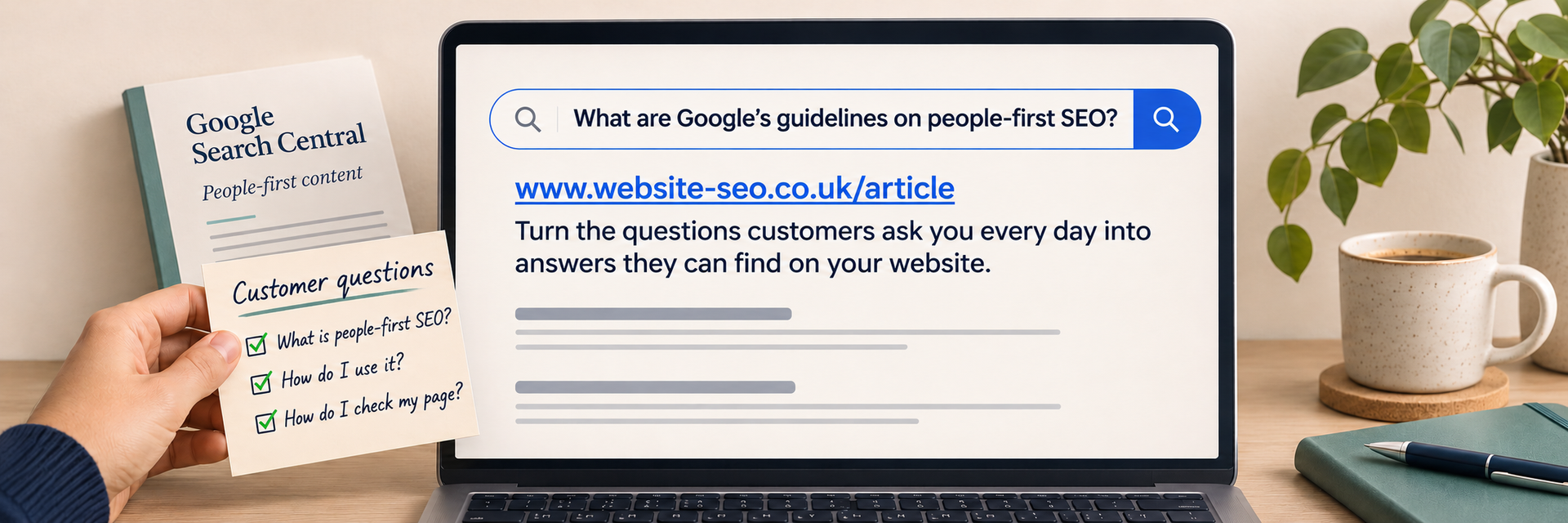
People-first SEO in plain English
People-first SEO means planning each page around what a customer came to find out. Use a heading they’ll recognise, answer their question in the first few lines and make it easy to find more detail or get in touch.
- Which question should I answer?
- How much detail should I give?
- Where should the reader go next?
- How can I check my own page?
Google asks whether readers leave a page having learned enough to do what they came to do. Think of the last person who rang your business for advice. Could they have found the same help on your website? Read Google’s guidance on creating helpful, reliable, people-first content.
Which question should I answer?
Start with a question customers ask before they know which service they need. When I’m planning a website, I ask the owner, “Think back to your last enquiry. What did the customer actually say?”
For Suffolk Roofline, I wrote a guide for someone who sees a damp patch beside an upstairs window after heavy rain. Their first question is likely to be “Why does that wall get wet when it rains?” At this point they want to understand the cause. That’s their search intent. Looking for a local installer comes later, if the gutter turns out to be the problem.
How much detail should I give?
Give the reader enough to make a decision or know what to check next. If someone asked me whether a leaking gutter could explain that damp patch, I’d answer along these lines.
Yes, a leaking gutter can cause damp beside a window. Next time it rains, look from ground level to see whether water is spilling down the outside wall above the patch. The damp mark indoors, on its own, won’t tell you where the water came from.
I’d put that answer above the first photograph. Someone who sees no sign of a leak can then skip to a heading such as “What else could cause damp around a window?”
Where should the reader go next?
Put the link where the next question occurs to the reader. If they’ve spotted a drip at one joint, they may be wondering whether the whole gutter needs replacing. Beside the paragraph about leaking joints, I’d use a link labelled “Can a leaking gutter joint be repaired?” They know what to expect before clicking.
Someone who already wants an inspection has different questions. Does the company cover my area? Can I send a photograph? I’d link directly to the guttering service from the guide and make it easy to find from the homepage too.
How can I check my own page?
Open one of your service pages on your phone with a real customer question in mind. Scan just the headings. Can you tell from the headings where to find the answer? If you find the answer halfway down a paragraph under “Our services”, try moving it under a heading that says what the paragraph is about. Then check whether the next step is just as easy to find.
If you have a page in mind, send me the link and tell me what customers keep asking. I’ll look at how easily they can find the answer and where the page could be clearer. Send me your page and question
See how I can help improve an existing website
Planning a new website?
I can build you one around the questions your customers ask, following Google’s people-first guidance with a clear aim in mind – more enquiries from the people you want to reach.